History of Fiber Reinforcement: From Straw to Modern Fiber
Reinforce Global · · updatedOctober 19, 2026
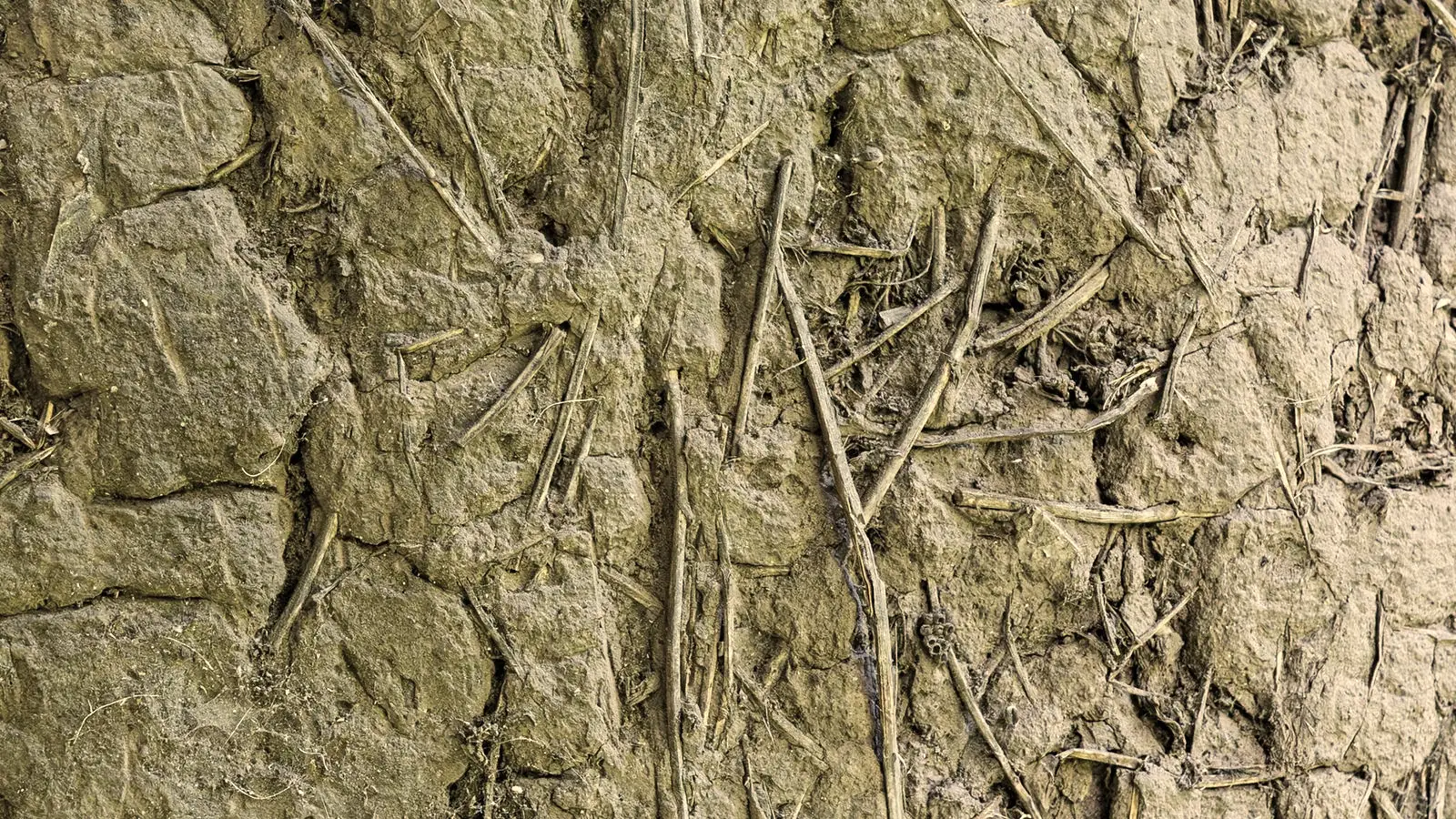
The idea of reinforcing a brittle material with fiber is not new. Ancient builders added straw to clay bricks, and in Europe, lime plaster was mixed with horsehair for centuries to keep it from cracking.
In 1900, the Austrian Ludwig Hatschek patented asbestos cement, and fiber became an industrial technology for the first time. When asbestos was recognized as harmful, engineers began looking for a safe substitute. That is how glass fiber-reinforced concrete, polypropylene fiber and continuous basalt fiber emerged in the 1960s–70s. Kyiv scientists and research institutes played an important role in this research.
Today, fiber-reinforced concrete is covered by international standards: the American Concrete Institute reports (ACI 544), published since 1973, and the European standard EN 14889-2. In other words, when you choose fiber, you are not choosing an experiment but a method backed by decades of research and practice.
Timeline
| Period | Event |
|---|---|
| Antiquity | Straw is added to sun-dried clay bricks to keep them from cracking as they dry. Even the Book of Exodus mentions it. |
| Around 1540 | Pueblo people in North America build homes from straw-reinforced adobe. |
| Until the late 19th century | Horsehair remains a common additive in lime mortars and plasters. |
| 1900 | Ludwig Hatschek patents asbestos cement (sold under the Eternit trademark from 1903). Fiber becomes an industrial technology for the first time. |
| 1950s–60s | The search for a safe substitute for asbestos. Glass fiber-reinforced cement is researched in Kyiv, and research on continuous basalt fiber is concentrated in Kyiv institutes. |
| Late 1960s – 1971 | Britain’s Building Research Establishment develops alkali-resistant (AR) glass for cement. Pilkington produces it under the Cem-FIL brand, and glass fiber-reinforced concrete (GRC) enters the market. |
| 1960s–80s | Polypropylene fiber becomes a mass-market material for floors, screeds and plasters. |
| 1973 | American Concrete Institute (ACI) Committee 544 publishes its first state-of-the-art report on fiber-reinforced concrete. |
| 2006 | EN 14889-2, the European standard for polymer fibers for concrete. |
| Today | Fiber has become a standard tool, from apartment screeds to industrial floors and facade panels. |
The materials that emerged in those decades are now everyday building materials. Polypropylene fiber works both as micro fiber against shrinkage cracks in screed and plaster and as structural macro fiber for floors and slabs on grade, which replaces steel mesh when confirmed by calculation. Basalt is made into basalt fiber for industrial and polished floors and heat-resistant concrete.
Sources
- ACI Committee 544. State-of-the-Art Report on Fiber Reinforced Concrete (ACI 544.1R-96), section “Historical background.”
- Wikipedia, Ludwig Hatschek.
- PCI Journal, May 1977, Glass Fiber Reinforced Concrete Products: Properties and Applications.
- CompositesWorld, Basalt Fibers: Alternative to Glass?
- EN 14889-2:2006 “Fibres for concrete. Part 2: Polymer fibres. Definitions, specifications and conformity.”
In short: questions and answers
When did polypropylene fiber for concrete appear?
Polypropylene fiber went from laboratory research to a mass-market material for floors, screeds and plasters in the 1960s–80s.
Which standard covers polymer fibers for concrete?
The European standard EN 14889-2:2006 “Fibres for concrete. Part 2: Polymer fibres. Definitions, specifications and conformity.”