Polypropylene Fiber for Screed: Dosage and How to Mix It
Reinforce Global · · updatedOctober 19, 2026
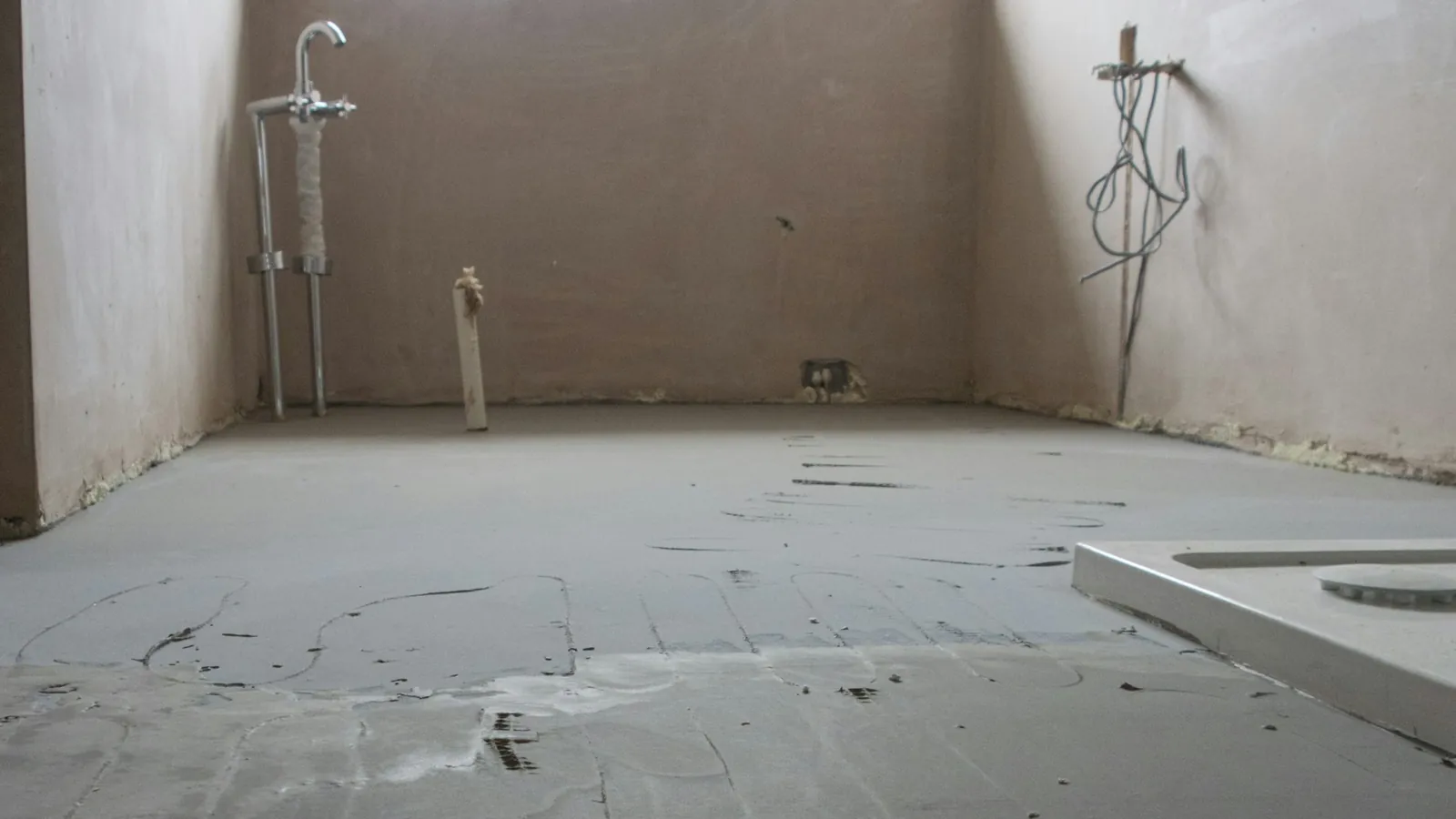
For sand-cement screed and underfloor heating screed, add 0.9–1.5 kg of 12 mm ReinLite polypropylene micro fiber per m³ of mortar, which is 0.9–1.5 g per liter. Add the fiber with the dry components, ideally the sand first, and only then the water. After the fiber goes in, keep mixing for at least another 3–5 minutes.
Screed that cracks a week after pouring is one of the most common renovation problems. The crack then shows through the tiles, or the laminate moves over it. Polypropylene fiber noticeably reduces these cracks at low cost, but only at the right dosage and with proper mixing. Here is how to calculate the dosage and add fiber in different mixers.
Why screed cracks
Most screed cracks come from shrinkage and temperature changes, not loads.
- Plastic shrinkage. In the first hours, water evaporates from the surface faster than the mortar can replace it from below. The top layer contracts before it has any strength. Drafts, sun, heat or a nearby heater greatly speed this up.
- Drying shrinkage. Over the next weeks, the screed keeps losing water and shrinking. More water in the mix means more shrinkage.
- Underfloor heating. A screed over pipes or cables heats up and cools down unevenly. If the heating is switched on too early or straight to full power, the risk of cracking rises sharply.
How micro fiber helps
ReinLite micro fiber consists of polypropylene fibers about 20 µm in diameter, and one kilogram contains hundreds of millions of them. During mixing, they spread through the whole volume and form a three-dimensional network. It holds the mortar together when it is most vulnerable: in the first hours and the first day after placing.
What this means in practice:
- fewer shrinkage cracks;
- less segregation and bleeding, a more even surface;
- a stronger surface with better resistance to abrasion and chipping.
Polypropylene does not rust and resists cement alkalis, so the fibers do not degrade in the screed. There are limits, though: micro fiber works against cracks in fresh mortar. It does not reinforce hardened screed under load or remove the need for movement joints and a perimeter edge strip.
How much fiber to add
For screeds and underfloor heating, the ReinLite dosage is 0.9–1.5 kg per m³ of mortar, and the fiber length is 12 mm. Use the lower end for an ordinary indoor screed, and go closer to the upper end for heated floors or harsh drying conditions: heat, drafts, dry air.
The calculation takes two steps:
area (m²) × thickness (m) = volume (m³)
volume (m³) × dosage (kg/m³) = fiber (kg)
Convert the thickness to meters: 5 cm = 0.05 m, 7 cm = 0.07 m.
| Area and thickness | Mortar volume | Fiber at 0.9 kg/m³ | Fiber at 1.5 kg/m³ |
|---|---|---|---|
| 20 m² × 5 cm | 1.0 m³ | 0.9 kg | 1.5 kg |
| 35 m² × 6 cm | 2.1 m³ | ≈1.9 kg | ≈3.2 kg |
| 50 m² × 5 cm | 2.5 m³ | ≈2.3 kg | ≈3.8 kg |
| 100 m² × 7 cm, heated floor | 7.0 m³ | 6.3 kg | 10.5 kg |
For a single batch: 1 kg/m³ equals 1 g of fiber per liter of mortar. A batch of about 100 liters takes 90–150 g of fiber. Weigh portions in advance on kitchen scales and bag them, so there is nothing to calculate on site.
Round up and keep a small reserve: on an uneven base, the real thickness is often greater than planned.
The dosages of all five of our products for concrete, floors, screeds and plasters are collected in one place in concrete fiber dosage per m³.
How much fiber per 25 kg bag of dry mix
For screed, the dosage is set per volume of finished mortar, not per bag weight, so the amount of fiber per bag depends on how much mortar the bag makes. The mix manufacturer prints the mortar yield in liters on the bag. From there, the same rule applies: a dosage of 1 kg/m³ equals 1 g of fiber per liter of mortar.
mortar yield per bag (L) × 0.9–1.5 g/L = fiber per bag (g)
Work this out once from the bag label and weigh out one portion of fiber per bag in advance. On site, you then add one ready portion to each bag.
For plasters, adhesives and dry mixes, the ReinLite page also gives the dosage as a percentage of the dry mix weight: 0.1–0.2%. For a 25 kg bag, that is 25–50 g of fiber. ReinGlass glass fiber for plasters and dry mixes is dosed at 0.1–0.3% of the weight, or 25–75 g per 25 kg bag. Don’t use these percentages for screed: calculate through liters of mortar, as shown above.
How to add the fiber, step by step
The main rule: add the fiber with the dry components or into the mixer drum, but never dump it into plain water in a single heap. After adding it, mix for at least another 3–5 minutes, about 15% longer than the normal cycle.
By hand or with a paddle mixer
- Put in the sand and add the fiber in portions, loosening it by hand.
- Mix dry until the fibers are evenly distributed.
- Add the cement and mix dry again.
- Pour in the water and mix until uniform.
If you usually pour dry mix into water, blend the fiber into the dry mix first, then add it to the water gradually.
Forced-action mixer
- Load part of the sand.
- Add the fiber in portions, not as a single compressed block.
- Add the rest of the sand, the cement, then the water.
- Once everything is loaded, mix for another 3–5 minutes.
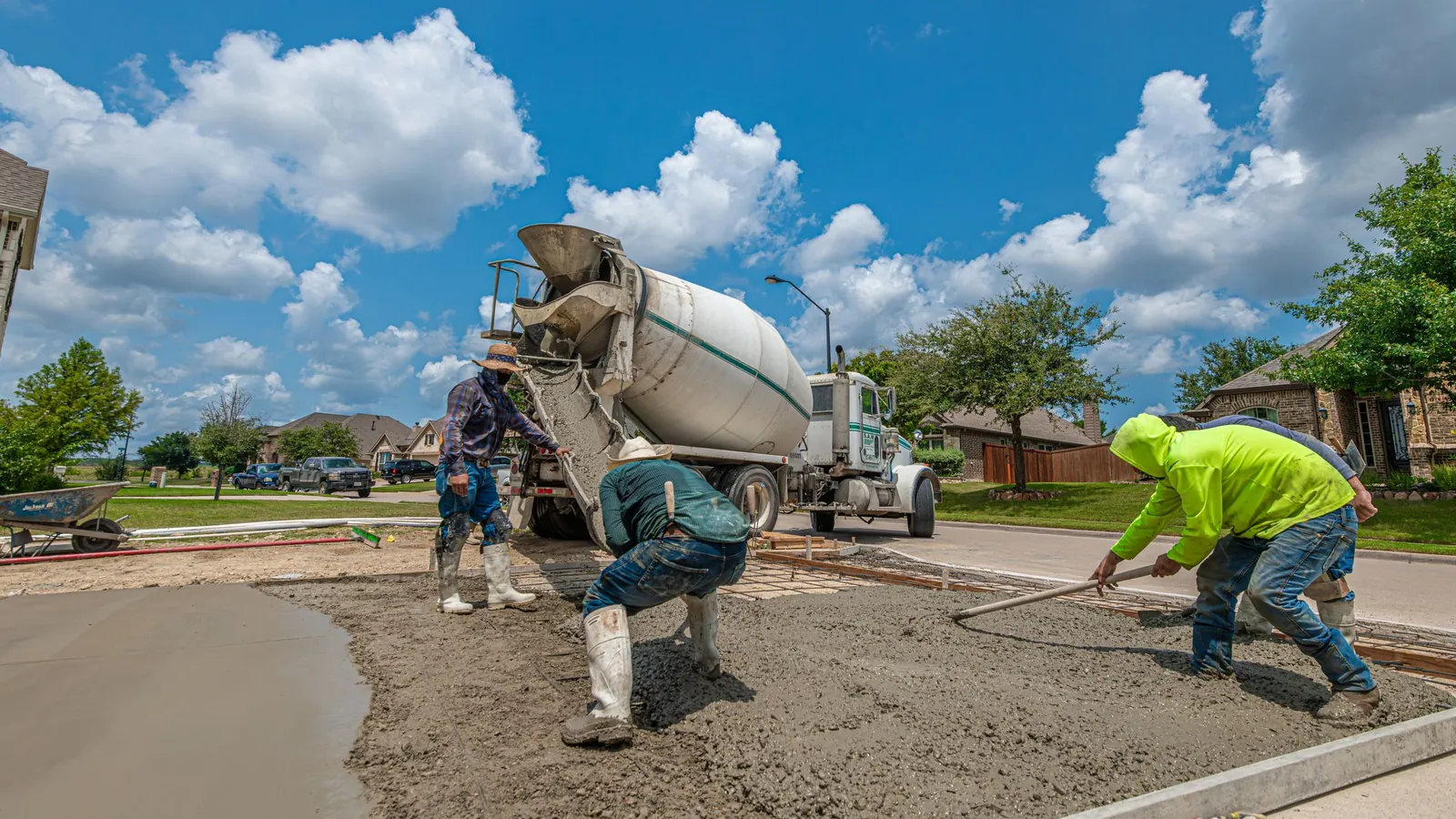
Ready-mix mortar in a truck mixer
- Easiest: ask the plant to add the fiber during batching.
- If you add it on site, put the fiber into the drum in portions.
- Mix for at least another 3–5 minutes before discharging.
ReinLite is compatible with all standard admixtures, so your plasticizer can stay.
Semi-dry screed
Semi-dry screed has little water, so the fiber must disperse in the dry sand. The dosage is the same as for ordinary screed: 0.9–1.5 kg of ReinLite per m³ of mortar.
- Load the fiber into the screed pump together with the sand, in portions.
- Let the sand and fiber mix, then add the cement and water according to the mix design.
- Then mix for at least another 3–5 minutes.
- Don’t add water by eye: the fiber needs no extra water.
Common mistakes
- Fiber dumped into water in one heap. The fibers form clumps that are hard to break up later. Add it with the dry components instead.
- “More is safer.” A dose above the recommended range makes the mortar harder to place and raises the risk of clumps. Stay within 0.9–1.5 kg/m³.
- Mixing too briefly. One minute after adding, the fiber has not dispersed yet. Areas without fibers remain, and that is where cracks are most likely.
- Extra water. Mortar with fiber can seem slightly stiffer, tempting you to thin it. Don’t: extra water increases shrinkage and lowers strength, which works against the fiber.
- No curing. Fiber does not replace curing. Cover fresh screed with plastic sheeting, stop drafts, and start underfloor heating only once the screed has gained strength, then bring it up gradually, as the mix manufacturer recommends.
When screed still needs steel mesh
Micro fiber does not replace rebar or steel mesh. Steel mesh or designed reinforcement is needed when:
- the design or the underfloor heating system manufacturer requires it;
- the screed will carry heavy point loads: a garage, a workshop, equipment;
- it is no longer a screed but a concrete slab on grade.
Where steel mesh is needed, ReinLite can go in alongside it: steel mesh does not stop early-age shrinkage cracks, and micro fiber works against exactly those. For concrete floors and slabs on grade, there is structural macro fiber that replaces steel mesh when confirmed by calculation. Read more in fiber vs steel mesh for concrete floors.
Which fiber to use
For screed and heated floors, use ReinLite 12 mm at 0.9–1.5 kg/m³. An alternative is ReinGlass glass fiber, dosed at 0.6–1 kg/m³ for screeds. It is stiffer and almost invisible on the surface, but it is mixed differently: 2–3 minutes after adding water and no longer, or the fibers start to clump. For choosing between materials, see how to choose concrete fiber. We are looking for distributor partners: contact us, and we will help with orders, dosage calculations and delivery to your country.
In short: questions and answers
How much fiber should I add per m³ of screed?
For sand-cement screed and underfloor heating screed, the dosage of ReinLite polypropylene micro fiber is 0.9–1.5 kg per m³ of mortar. For screeds, use the 12 mm fiber length.
How much fiber do I need per m² of screed?
It depends on the thickness. A 5 cm screed is 0.05 m³ of mortar per m², so at 0.9–1.5 kg/m³ you need 45–75 g of fiber.
How much fiber should I add per 25 kg bag of dry mix?
For screed, the ReinLite dosage is set per volume of mortar: 0.9–1.5 g per liter. Multiply the mortar yield per bag in liters, printed on the bag, by 0.9–1.5 g. For plasters, adhesives and dry mixes, ReinLite is dosed at 0.1–0.2% of the dry mix weight, which is 25–50 g per 25 kg bag.
Should I add fiber to screed before or after the water?
Add it with the dry components, ideally the sand, and only then add the cement and water. Don't dump the fiber into plain water in a single heap, and keep mixing for at least another 3–5 minutes after adding it.
Will polypropylene fiber melt in a heated floor?
No. ReinLite fibers melt at about 160 °C, and underfloor heating runs at a much lower temperature.
Does fiber replace steel mesh in screed?
No. Micro fiber reduces shrinkage cracks in fresh screed, but it does not replace rebar or steel mesh where the design requires them.