Fiber vs Steel Mesh: How to Reinforce a Concrete Floor
Reinforce Global · · updatedOctober 19, 2026
For most concrete floors and slabs on grade, structural macro fiber can replace steel mesh, provided this is confirmed by engineering calculations. In load-bearing structures (suspended slabs, beams, columns), fiber does not replace structural rebar; it only supplements it. Micro fiber for shrinkage cracks replaces neither rebar nor steel mesh.
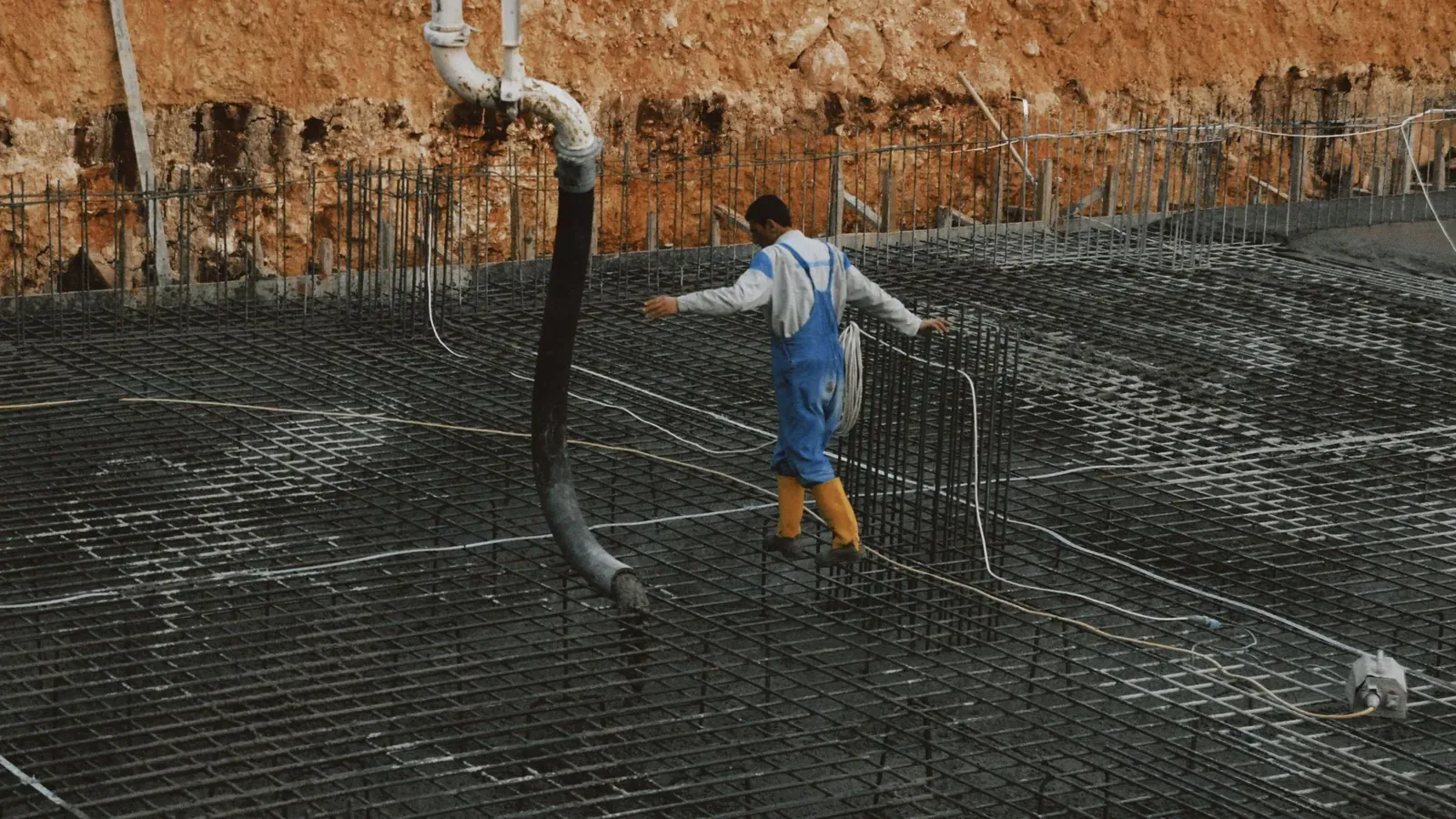
Concrete floors have traditionally been reinforced with steel mesh (welded wire mesh). But steel mesh has two drawbacks: it works in only one plane, and it often ends up in the wrong place. Workers walk on it during the pour, it sinks to the bottom of the slab, and it stops doing its job.
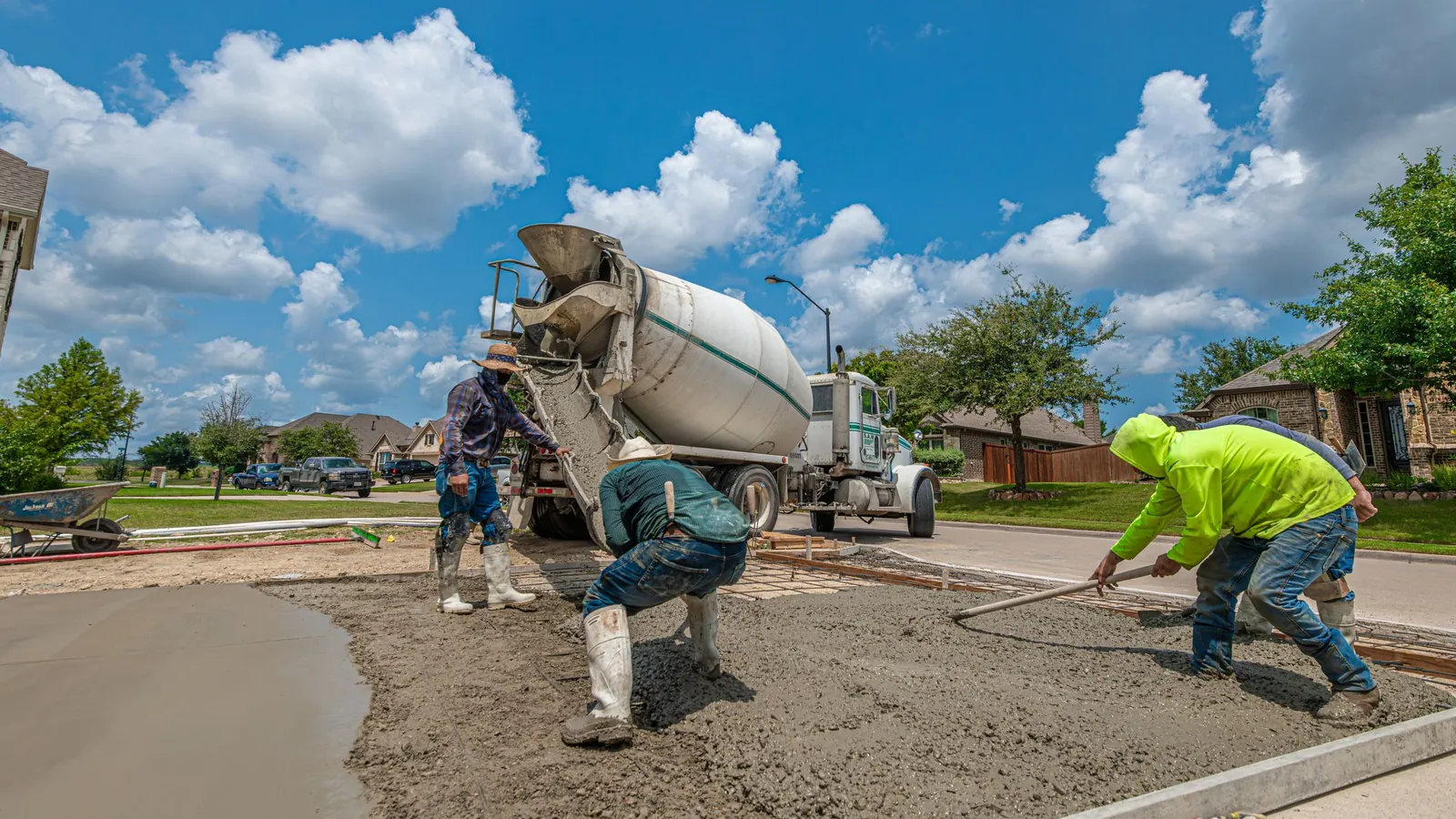
Macro fiber reinforces concrete throughout its entire volume, from the base of the slab to the surface. It is already in the mix when the concrete arrives on site.
Macro fiber vs steel mesh compared
| Steel mesh | Macro fiber | |
|---|---|---|
| Installation | Tying, chairs, raising to design height | None: the fiber arrives in the concrete |
| Pour speed | The truck mixer waits while the steel mesh is placed | Pour right away, including with a laser screed |
| Position in the slab | One plane, often displaced | Throughout the entire volume |
| Corrosion | Possible, especially near the surface | None |
| Shrinkage cracks | Does not stop early-age cracks | Limits crack opening |
| Logistics | Tons of steel, a crane, storage | Bags of a few kilograms |
| Load-bearing structures | Structural rebar sized by calculation | Does not replace structural rebar, only supplements it |
| How performance is proven | Reinforcement design calculation | Residual strength fR1 and fR4 to EN 14651, plus the slab design |
Where fiber works best
- Industrial and warehouse floors
- Slabs on grade, foundation slabs for private homes
- Outdoor pads, parking lots, sidewalks
- Precast concrete and shotcrete
Can fiber replace rebar?
In floors and slabs on grade, yes: structural macro fiber replaces steel mesh when this is confirmed by calculation. In load-bearing structures, no: in suspended slabs, beams and columns, fiber supplements the structural rebar but does not replace it.
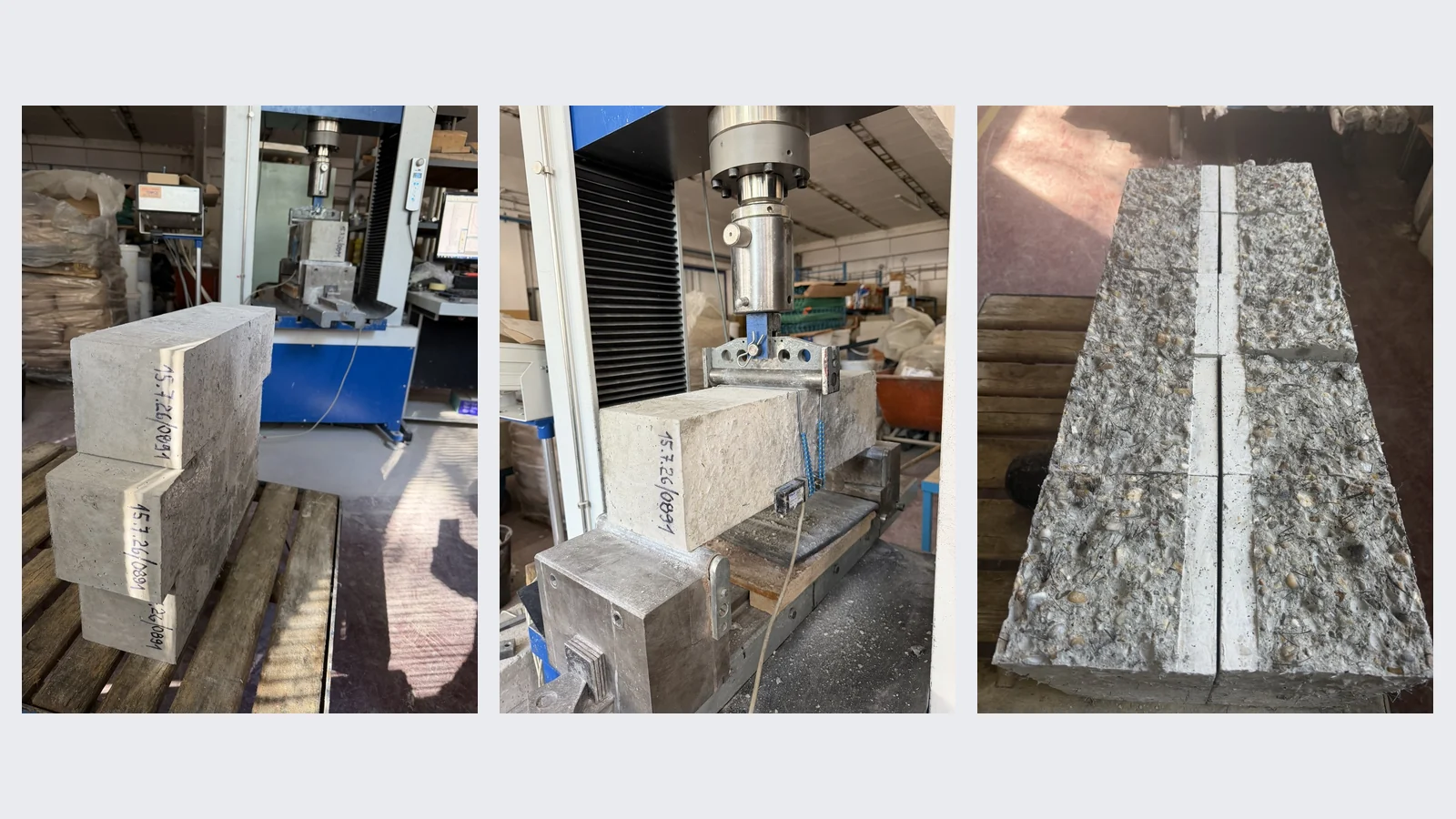
Macro fiber such as ReinStrong does its work after a crack forms. The fibers “stitch” the crack and keep it from opening, so the concrete keeps carrying the load after the first crack. This post-crack performance is measured to EN 14651 as residual strength fR1 and fR4, and these are the values an engineer uses in the slab design. We show how this test works in our article on the CMOD test to EN 14651.
The DoP dose of ReinStrong that provides fR1 ≥ 1.5 MPa and fR4 ≥ 1.0 MPa is 4.5 kg/m³. This is not a universal dose for every floor: how much fiber your slab needs is decided by a calculation for its load and thickness.
Suspended slabs, beams, columns and other load-bearing structures carry main structural rebar sized by calculation. In these elements, fiber can supplement the reinforcement, for example ReinFlex in floor slabs on metal decking, but it cannot replace it.
Micro fiber such as ReinLite works against shrinkage cracks in fresh concrete. It does not reinforce hardened concrete under load and replaces neither rebar nor steel mesh.
When you still need steel mesh
Steel mesh stays where replacing it with fiber has not been confirmed by calculation, and where the fiber is doing a different job.
- The design calls for steel mesh, and there is no slab design with fiber.
- Only micro fiber is added to the concrete. It reduces early-age shrinkage cracks but does not reinforce hardened concrete.
- Load-bearing structures. In suspended slabs, beams and columns, the reinforcement is sized by calculation, and fiber only supplements it.
- A screed under heavy point loads (a garage, a workshop, equipment), or an underfloor heating system whose manufacturer requires steel mesh.
Where steel mesh is needed, micro fiber can go in alongside it. Steel mesh does not stop early-age shrinkage cracks, and micro fiber works against exactly those. For screeds, see polypropylene fiber for screed.
Which fiber to choose
For most floors, ReinStrong is a good fit. For floors under forklifts and racking, where impact resistance matters, ReinFlex is the better choice: it also protects against shrinkage cracks. The dosages of both products for each application are collected in concrete fiber dosage per m³. We are looking for distributor partners: contact us, and we will help with orders, dosage questions and delivery to your country.
In short: questions and answers
Can you pour a concrete floor with fiber and no steel mesh?
Yes. For most slabs on grade and industrial floors, structural macro fiber fully replaces steel mesh, provided the dosage is confirmed by calculation.
When does fiber not replace rebar?
In load-bearing structures (suspended slabs, beams, columns), fiber supplements the main structural rebar but does not replace it without a calculation.
How much macro fiber replaces steel mesh?
The DoP dose of ReinStrong, which provides fR1 ≥ 1.5 MPa and fR4 ≥ 1.0 MPa, is 4.5 kg/m³. Whether your slab can do without steel mesh, and at what dosage, is decided by an engineering calculation for the load and slab thickness.
Does micro fiber replace steel mesh?
No. Micro fiber such as ReinLite reduces shrinkage cracks in fresh concrete, but it does not reinforce hardened concrete. To replace steel mesh, you need structural macro fiber.
Can fiber be used together with steel mesh?
Yes. Where the design requires steel mesh, you can add micro fiber to the concrete as well. Steel mesh does not stop early-age shrinkage cracks, and micro fiber works against exactly those.